
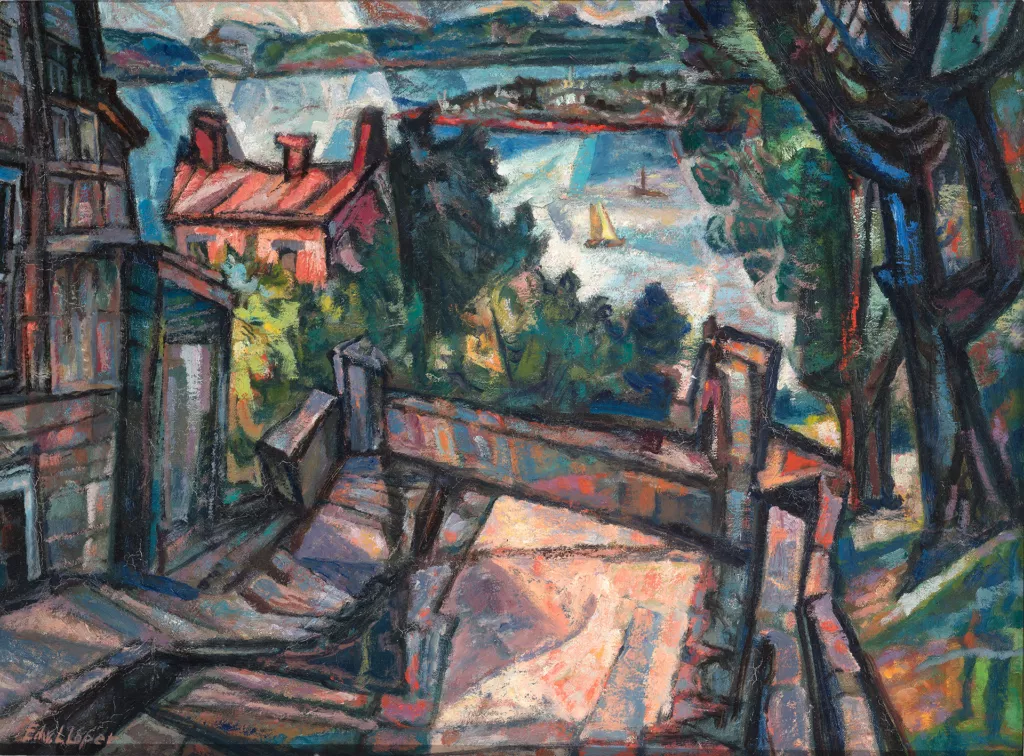
Edward Loper, Sr. (1916-2011), End of the Road, c. 1965, Oil on canvas, 27 ½ x 34 ¼ in. (69.8 x 86.9 cm), Gift of Carolyn and Louis Wonderly, 2023.18.3
What does 250 years of Delaware history look like through the eyes of our neighbors? To answer, we invited 25 diverse voices from across our state to serve as community curators. Each selected one piece from our collection, making Reflections: 25 Objects for 250 Years of Delaware History an exhibition curated entirely by our local community. Each post in this series features one object and the personal story of why it was chosen to represent our region’s history or felt particularly relevant to our contemporary moment.
Meet the Community Curator
Senator Lisa Blunt Rochester (D-DE)
U.S. Senator for Delaware
Senator Lisa Blunt Rochester represents Delaware in the United States Senate where she serves on the Committees on Banking, Housing, and Urban Affairs; Commerce, Science, and Transportation; Environment and Public Works; and Health, Education, Labor, and Pensions.
Prior to the Senate, she served in the U.S. House of Representatives for eight years where she championed policies to lower costs, invest in affordable housing, and build an economy that works for everyone. Before Congress, Senator Blunt Rochester served as Delaware’s Deputy Secretary of Health and Social Services, Secretary of Labor, and State Personnel Director, as well as CEO of the Metropolitan Wilmington Urban League.

Curator Reflection
Few artists captured the soul of Delaware like Edward L. Loper, Sr. One Sunday afternoon, I had the privilege of spending time with him and discussing his artistic journey. I was struck then by his bold use of color, balancing light and darkness.
Mr. Loper’s work reminds us that art is not only a reflection of beauty, but also a record of who we are and who we aspire to be. A copy of his painting, “End of the Road,” hangs in my office. It holds a special place in my heart because it invites us to pause, reflect, and think about what lies ahead.
As we face our own questions about the future, “End of the Road” feels especially relevant. Mr. Loper painted it during the 1960s, an era of significant change in America. Today, it serves as a reminder that progress requires courage, creativity, and the tenacity to keep our eyes on the prize.
About the Artist
From 1963 to 1968, Loper attended classes at the Barnes Foundation, where he closely studied paintings by artists including Paul Cézanne, Pablo Picasso, and Henri Matisse. As a result, Loper’s own artwork became more structured and vividly colored. He began experimenting with a kind of kaleidoscopic cubism, refracting subjects into planes as if seen through shards of glass. A teacher himself in Wilmington, Loper shared his distinctive approach to form and color with generations of artists in the region.
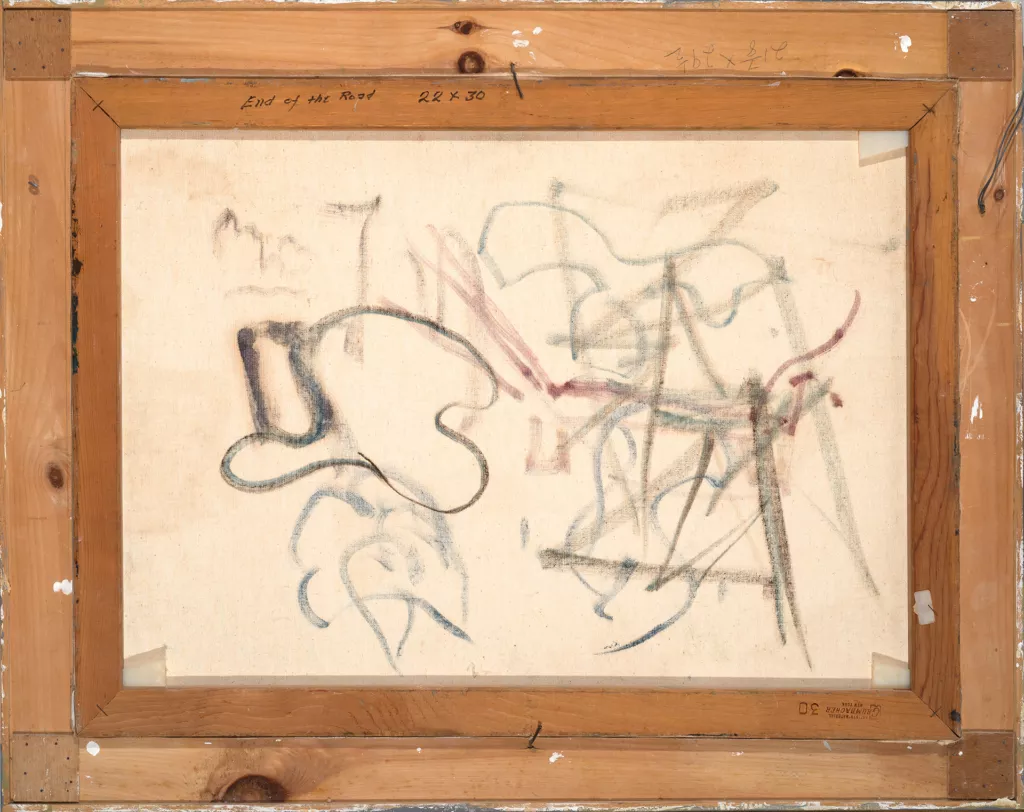
Loper first began traveling to Québec City, Canada, in the 1940s to escape the racism that he experienced as an African American artist working in Delaware, particularly when painting outdoors. In the 1960s, he began taking groups of students to Canada in the summers. Carolyn Wonderly, the donor of this painting, was one of those students. This painting was completed in front of the class, and she purchased it afterwards. The back of the canvas features a series of bold brushstrokes. While teaching, Loper would flip the canvas over and sketch rough forms with his paintbrush to help his students understand principles of color and composition.
Engage Beyond the Artwork
In what ways does examining 1960s art offer guidance for contemporary times?
About the Exhibition
On view until January 3 – Reflections: 25 Objects for 250 Years of Delaware History is an exhibition curated entirely by Delaware community members reflecting on the nation’s 250th anniversary.
Visit and explore all 25 objects, community reflections, and the opportunity to add your own reflection.